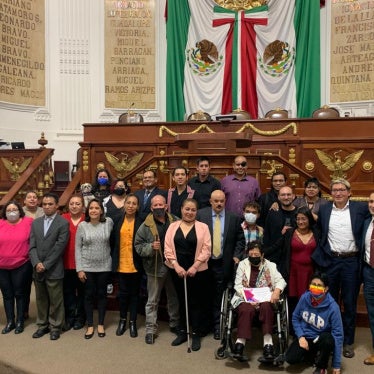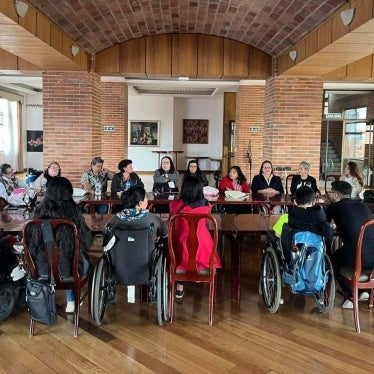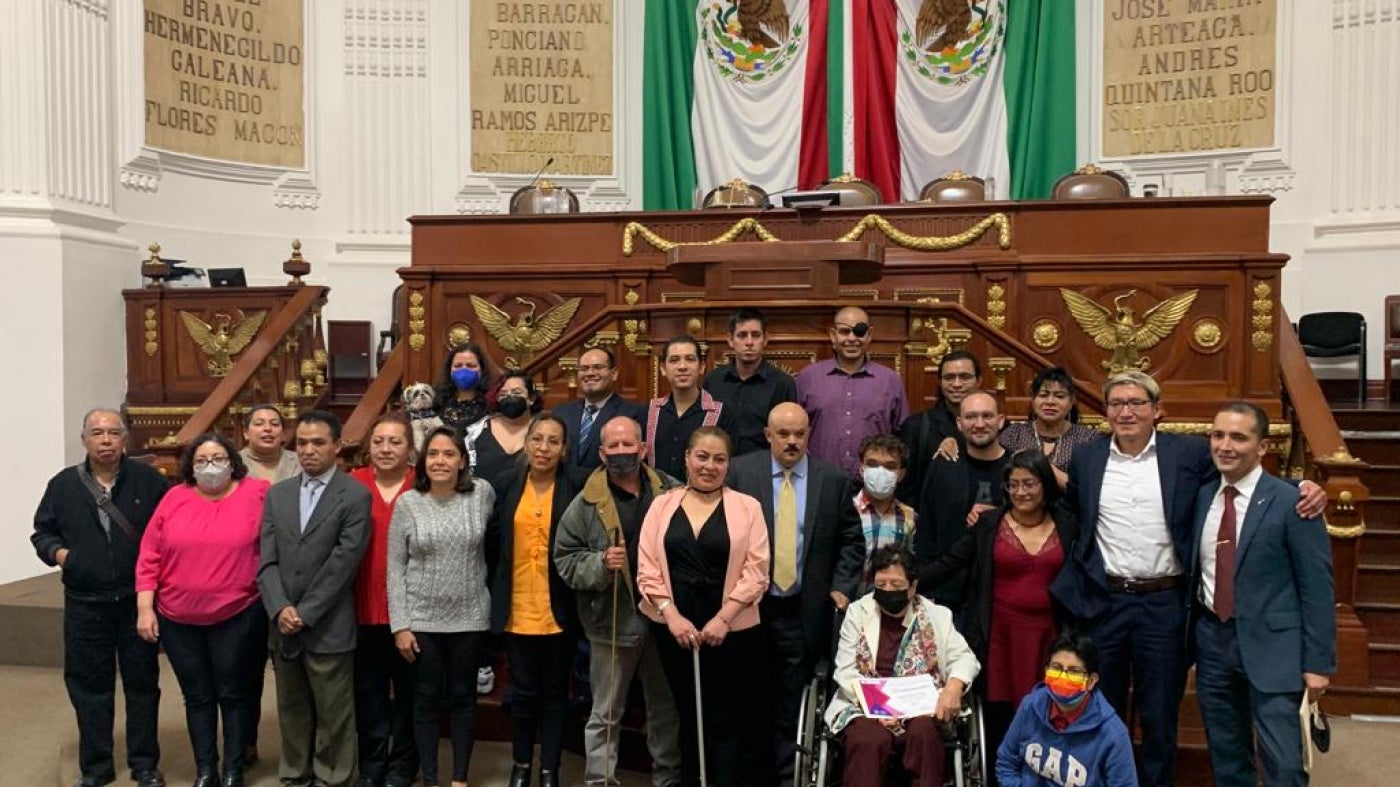
The Roadmap for Change: The Path Toward Implementing the Legal Capacity Reform in Mexico City offers practical guidance to help ensure that notaries can implement key 2024 reforms of Mexico City’s Civil Code in line with international human rights standards. Developed by Human Rights Watch and the College of Notaries of Mexico City, the document offers guidance on how to translate legal principles into concrete practices that respect the autonomy, will, and preferences of all adults, including people with disabilities and older people.
Through detailed hypothetical case studies and easy-to-use annexes, the roadmap demonstrates how notaries can apply the supported decision-making model in real situations—such as managing an inheritance, drafting a power of attorney, or planning for future supports—while safeguarding individuals’ rights. The publication underscores Mexico City’s leadership in advancing the right to equal recognition before the law. Its actions set a model for jurisdictions seeking to move beyond substituted decision-making toward inclusive, rights-based systems of support.
Introduction
1. Legal Capacity Reform in Mexico City
In line with the evolution of international human rights law toward greater inclusion and equality, the National Code of Civil and Family Procedure (CNPCyF) establishes the universal recognition of full legal capacity for all adults (people 18 or older).[1] These provisions, among others, came into force in Mexico City in December 2024.[2]
The reform has been welcomed by the Inter-American Commission on Human Rights as an important step in advancing the rights of people with disabilities in Mexico.[3] At the same time, ensuring that this progress translates into daily practice requires clear guidance and practical tools. For this reason, Human Rights Watch and the College of Notaries of Mexico City have developed this roadmap, which offers concrete recommendations to strengthen implementation of the reform.
To ground these recommendations, this document draws on hypothetical cases based on common situations that arise before notaries. The cases do not provide prescriptive directives, but are examples of good practices designed to demonstrate how notaries can apply the principles of the reform in ways that respect and promote the autonomy, will, and preferences of supported persons.
In addition to the hypothetical cases, a series of annexes is included at the end of the document. The annexes are intended to provide notaries with practical tools for use in the services notaries routinely provide. The aim is not to describe each procedure in detail, since notaries themselves are already experts in carrying them out, but to offer illustrative examples of how these procedures can be explained to their clients in a clear and accessible way.
Three of the most common operations are included: the formalization of a deed of sale, the acceptance, inventory, and award of an inheritance, and the drafting of a power of attorney. While many other procedures could be addressed in a similar manner, these examples are provided for illustration as they represent some of the most frequently encountered acts before notaries.
Before turning to these hypothetical case studies, this roadmap first analyzes the key changes introduced by the 2024 reform to the Mexico City Civil Code (CCDMX)[4]—the city’s substantive civil code—and explains how they align with the provisions of the CNPCYF that guarantee legal capacity for all adults.
Currently, in Mexico City, the right to equal recognition before the law applies in all circumstances, and no one may be deprived of this right for any reason.[5]
This was not always the case in Mexico, whose civil legislation, adopted in 1928 for the then-Federal District and federal territories, denied certain people legal capacity based on individual circumstances. For example, Article 450 of the civil legislation for the Federal District and federal territories[6] stated that children and “adults deprived of intelligence due to insanity, idiocy, or imbecility, deaf-mutes who could not read or write, habitual drunkards, and those who regularly made immoderate use of narcotic drugs” lacked legal capacity. Subsequent revisions of this law removed or revised several grounds for restricting legal capacity and adopted less pejorative language. However, legal capacity restrictions remained in place despite being based on rationale that contravenes international human rights law.
2. International Human Rights Framework
The Universal Declaration of Human Rights (UDHR), adopted in 1948,[7] laid the foundation for modern human rights protections. Since then, the development of nine core international human rights treaties[8] has expanded and deepened the recognition and scope of these fundamental rights.
The core treaties are the International Covenant on Civil and Political Rights (ICCPR) and the International Covenant on Economic, Social and Cultural Rights (ICESCR), both adopted in 1966,[9] as well as subsequent international instruments that protect the rights of population groups at risk of exclusion, such as children, women, persons with disabilities, and migrant workers, and address specific types of violations. Another international instrument on the rights of older persons is being developed.[10] Together, these instruments and their monitoring processes have contributed to the ongoing expansion of legal protections that take into account individuals’ specific circumstances. In addition, most of these rights have been recognized in regional human rights treaties, including the American Convention on Human Rights (ACHR).
The ICCPR (via article 16) and the American Convention on Human Rights (via article 3), adopted in 1969, both establish the right to recognition as a person before the law.[11]
A decade later, the right to equal recognition before the law, including in relation to legal capacity, was also incorporated into the Convention on the Elimination of All Forms of Discrimination against Women (CEDAW), adopted in 1979.[12] Article 15 guarantees women’s equality with men before the law and equal legal capacity in civil matters, particularly with respect to signing contracts, managing property, and accessing justice.[13]
The most recent global treaty that codifies the right to equal recognition before the law, including in relation to legal capacity, is the Convention on the Rights of Persons with Disabilities (CRPD), adopted in 2006 and ratified by Mexico in December 2007.[14] Article 12 of the CRPD guarantees persons with disabilities the right to legal capacity on an equal basis with others “in all aspects of life.”[15] Article 30 of the Inter-American Convention on Protecting the Human Rights of Older Persons, adopted in 2015, also guarantees older persons equal recognition before the law and legal capacity.[16]
Importantly, the animating principle of the CRPD is not that there should be special or new rights for persons with disabilities. Rather, it affirms that persons with disabilities are entitled to enjoy human rights on an equal basis with others under international law.
3. Right to Legal Capacity and Legislation in Mexico City
On November 29, 2024, the Official Gazette of Mexico City published a reform,[17] approved by the Congress of Mexico City, to harmonize certain provisions of the CCDMX with the CNPCYF. The next month, the reform entered into force in Mexico City.
Since then, both the national civil procedural code and Mexico City’s substantive civil code have enshrined the universal recognition of full legal capacity for all adults, regardless of disability status or older age. Under these frameworks, while legal capacity may be restricted in specified factual situations, it may never be restricted on the basis of any protected status.
3.1 Recognition of Full Legal Capacity and Supported Decision-Making
Under international human rights law, a person’s right to legal capacity cannot be restricted or denied based on their perceived or actual mental capacity,[18] nor can individuals be required to use supports in order to carry out certain activities if they prefer to carry them out independently.[19]
The reformed CCDMX reflects this principle. Article 24 affirms that all adults possess full legal capacity, subject only to specified factual circumstances that may allow temporary restriction, as detailed below.[20] Article 23 further provides that while all adults may request supports to exercise their legal capacity, they may never be compelled to use such supports.
This is consistent with the CNPCYF, whose article 445 contains a similar provision[21] and seeks to prohibit substituted decision-making in which a person is empowered to make decisions on behalf of another individual. Unfortunately, such protections have not been universally upheld. In some countries, including Brazil and Colombia, legal frameworks have regressed by allowing third parties to require individuals to use supports in order to carry out any legal act, undermining the principle that requests for supports should be voluntary and never imposed.[22]
Fortunately, Mexico’s legal framework now affirms the rights-based approach. The CCDMX allows for both the designation of ordinary and advanced supports to assist individuals in exercising their legal capacity.
Individuals may voluntarily designate ordinary supports to help exercise their legal capacity in accordance with their will and preferences.
In specified exceptional circumstances, the CCDMX also provides modalities for the exercise of legal capacity (article 450, section II):
Adults whose will cannot be determined by any means, even after real, substantial, and appropriate efforts have been made and accessibility measures and reasonable accommodations have been provided, shall exercise their rights through the ordinary support previously designated; if such designation was not made, extraordinary support must be provided in accordance with the CNPCYF, always guaranteeing the necessary safeguards to facilitate the exercise of their rights.
This provision refers to the procedure for judicially designated extraordinary supports, which is regulated under the CNPCYF.
Thus, the CCDMX now establishes clear rules for both the designation of ordinary supports (article 24(D)) and the advance designation of supports (article 24(A)). The key distinction between these two designation processes is that an advance designation of support does not take effect immediately; it is triggered only once certain predetermined conditions are met.
Taking article 24(A) and 24(D) together:
- All adults (people 18 or older) have full legal capacity to exercise their rights.
- All adults may choose to designate ordinary supports to assist in the exercise of their legal capacity but are not required to do so.
- The law explicitly allows for the advance designation of support, enabling individuals to plan for future situations in which support may be needed.
- When a person’s will and preferences cannot be determined by any means, and there is a risk of rights violations, legal capacity may be exercised through a previously designated ordinary support person. If no such designation exists, then the option of judicially designating extraordinary supports may arise, in accordance with the CNPCYF.
3.1.1. Specified Factual Circumstances Allowing Legal Capacity Restrictions
Article 450 regulates the two situations in which an adult may have their legal capacity temporarily restricted:
- If an adult is under the influence of recreational “toxic substances,” such as alcohol or other drugs, their legal capacity is temporarily restricted until the substance’s effects wear off (section III).
- If an adult suspends the payment of their enforceable debts and is consequently declared bankrupt, their legal capacity is temporarily restricted until they are no longer insolvent (section IV).
Neither situation results in the permanent restriction of an individual’s general legal capacity.
The CCDMX explicitly prohibits any restriction based on protected status, such as intellectual disability, sensory disabilities (like deafness or blindness), or cognitive decline. This eliminates any limitations based on disability, a supposed lack of mental capacity.
Under the new Civil Code (article 452), only children (i.e. people under 18) may be subject to guardianship. The supported decision-making model prevails for all adults.
The following section addresses the different designations of supports that are now recognized under civil law as mechanisms to facilitate the exercise of legal capacity.
3.2. Designation of Ordinary Supports for the Exercise of Legal Capacity
Most of the requirements for designating ordinary supports and advance supports are similar. However, there are two key differences: ordinary support begins immediately, while advance support only takes effect when specific future conditions are met, and advance designation requires additional formalities, including notarization of all advanced directives as a safeguard.
The option to designate ordinary supports was established to ensure that any person, at any time, may choose their desired supports when exercising their rights. Ordinary supports include human or animal assistance; instrumental support, such as assistive devices, mobility aids, communication tools, and assistive technologies; or any other resources necessary to facilitate daily life.
Regardless of form—human, animal, or instrumental—all supports share the common goal of ensuring that the individual’s will and preferences are respected in recognition of their autonomy and dignity.
According to Article 24(E) of the Civil Code, supports may include, among others, assistance for:
- Communication, including oral language, text-to-speech voice readers, sign language, and other non-verbal forms of communication (such as text displays), tactile communication (such as Braille), large print, user-friendly multimedia, written language, auditory systems (such as hearing loops), plain language, easy-to-read language, and other augmentative or alternative accessible formats and technologies.
- Understanding legal acts and their consequences.
- Expressing one’s will and preferences.
- Personal mobility, regardless of whether it is directly linked to the exercise of legal capacity (e.g. wheelchairs, hearing aids, and screen readers).
This list is not exhaustive, as an individual’s needs and required forms of support may be diverse. Both the CNPCYF[23] and now the Civil Code affirm that support measures must be designed to facilitate the decision-making process of the person and respect their will and preferences.
3.2.1. Requirements and Safeguards for the Designation of Ordinary Supports
Article 24(G) of the CCDMX states that any adult (i.e. a person 18 years or over), or in specific cases children, may choose to designate ordinary support measures and safeguards regardless of disability, presumed mental capacity, or older age. In other words, anyone, for any reason, may designate someone to assist them in exercising their legal capacity. No prior mental capacity assessment or evaluation is required.
The Civil Code establishes two procedural safeguards depending on the value of the legal acts:
- For legal acts valued at more than 1,000 times the current unit of account in Mexico City (US$5,830), a notarized public deed must formalize the designation.
- For legal acts of lesser value, the person requesting the support and the person agreeing to provide it must both sign a private contract. (Notarization is not required.)
A person may designate different supports for different aspects of their life, such as health or property, while always retaining the final decision-making authority. The designation of supports does not imply legal representation unless the parties expressly agree through a mandate or power of attorney in accordance with applicable provisions of the Civil Code.
Legal persons (entities) that are non-profit organizations whose main purpose is to deliver ordinary support measures may also act as support providers (article 24(N)). However, further regulations to establish requirements, protocols, and safeguards to prevent abuse and ensure access to remedies are still pending.
The designation document (whether a notarized public deed or private contract) must clearly and narrowly define the following:
- The purpose and scope of the support (e.g. whether it pertains to health, property, education, employment, or daily living).
- The duration of the support. If a duration is not explicitly specified, the support ends once its stated purpose is fulfilled. While designations of indefinite duration are not prohibited, they are a poor practice because they hinder periodic review and the evaluation of support quality.
- As appropriate, safeguards to prevent conflicts of interest or undue influence, including mechanisms such as periodic reviews or external oversight (article 24(F)).
These four minimum requirements for the designation document are specified in article 24(H): identification of the designated natural or legal person(s); the specific purpose and scope; the duration of the support; and any additional safeguards, such as periodic reviews or external oversight.
The designated support person must accept the role either expressly or tacitly (for example, by acting in a way that implies consent to the role (article 24(I)). If the support person wishes to withdraw before their term ends, they must provide timely notice to the supported person, allowing sufficient time for a replacement to be appointed without creating a situation of vulnerability for the supported person. Failure to do so may entail civil liability.
The supported person has the right to revoke the designation at any time via the same means used to make the designation; that is, through a private contract or a notary
(article 24(J)).
3.3. Advance Designation of Supports for the Exercise of Legal Capacity
The advance designation of supports differs from the designation of ordinary supports in that it only becomes valid and effective once certain predefined conditions, established by the person requesting the support, are met. Also, all advance designations must be formalized through a notarized public deed.
Only adults may make advance designations.
As with the designation for ordinary supports, the advance designation document must clearly specify the form of the support, including its specific purpose, scope, and duration. In addition, it must specify guidelines that the designated support person must follow in fulfilling their role.
Furthermore, the document may also include exclusion clauses, explicitly indicating individuals who may never be designated as support persons, or circumstances under which certain individuals may not be designated.
This mechanism reinforces a person’s autonomy by allowing them to retain control over future decisions, while ensuring that any future support arrangements reflect their will
and preferences.
Chapter One: Case Study - Designation of
Ordinary Support in Practice
This chapter presents a case study illustrating how the reformed Mexico City Civil Code provisions on legal capacity and support can be practically implemented. Through an example involving a person with a disability seeking to manage an inheritance, the chapter demonstrates how notaries can facilitate the exercise of legal capacity using inclusive, rights-based approaches. The case highlights the practical applications of ordinary support designations, outlines recommended notarial practices, and reinforces the importance of ensuring that the process respects an individual’s autonomy, will, and preferences.
First Moment: Case Intake
On June 25, 2025, the lawyer of Mr. Funes Romero contacted the offices of Notary number YY, stating that his client wished to schedule an interview to request notarial services related to the procedures necessary for Mr. Romero to receive an inheritance from his mother. He also mentioned that Mr. Romero wished to manage the money from his mother's life insurance payout.
The lawyer explained that Mr. Romero had a condition known as West syndrome, a rare disease that results in both physical and intellectual disabilities.
Recommendation: It is common for requests related to the designation of supports to be requested by family members of older adults or persons with disabilities. In such cases, the notary public must always ensure that the individual genuinely intends to make the designation.[24] For this purpose, a good practice is to arrange a personal, direct interview with the individual seeking to designate supports. During this meeting, the notary should address any specific communication or accessibility needs.[25] Attached to this manual are tools designed to explain, in simple and accessible language, the most common legal acts carried out before a notary public, such as property deeds, inheritance proceedings, powers of attorney, and others. While another person may assist with or facilitate communication, the notary must verify that the expressed will is unequivocally that of the supported person.[26] Remote services using a Mexican Sign Language interpreter or other communication tools can be used to ensure this. Under no circumstance should the designation of supports proceed solely at the request of the family or third parties if it is unclear whether it reflects the person's own will. Instead, the notary should refuse to act and suggest, when the case warrants it, the extraordinary designation of supports, which is regulated in the National Code of Civil and Family Procedures. |
Second Moment: Initial Interview
On August 10, Mr. Romero attended an interview accompanied by his father and lawyer at a notary office in Mexico City.
Following the principles set out in the legal capacity reform for all adults under national and Mexico City legislation, the notary addressed Mr. Romero directly to ask what services he was seeking. To facilitate understanding, the notary suggested making accessibility adjustments.
| Recommendation: Avoid treating people requesting services in a paternalistic or infantilizing manner at all times. What would not be done to people without disabilities should not be done to those who have them. Always treat people with dignity and respect, in recognition of their autonomy and decision-making capacity. |
Recommendation:
|
Mr. Romero stated that he wanted to understand the procedures required to access the inheritance left by his mother and to manage the life insurance for which he was named beneficiary.
The inheritance consisted of a property located at Cuauhtémoc Street number 300, Benito Juárez neighborhood, Centro, in Mexico City, and a life insurance payment totaling 500,000 pesos (or approximately US$26,800).
| Recommendation: People seeking notarial services may not always clearly articulate their needs. The notary's role, as a facilitator of legal capacity, should ask open, clarifying questions to help individuals identify their goals—and may present an array of legal options—but without inducing or steering the person toward a specific outcome.[27] |
After listening to the statements from Mr. Romero and his lawyer, the notary explained that, according to the new legislation in effect since December 2024, he had the full legal right to manage his estate.[28] He could use the inherited property and the life insurance proceeds as he saw fit.
The notary then explained that he had the right to designate a support person to help him clearly understand, in plain language, all matters related to the estate. This person would have certain obligations to assist Mr. Romero in making informed decisions about the use of his estate.[29]
He recommended choosing someone he fully trusted to reduce the risk of deception or mismanagement. Since Mr. Romero wished to understand how to manage both the property and the insurance proceeds, the notary suggested that he consider support for specific tasks such as selling or leasing the property and making decisions about the use of funds. Mr. Romero would also define how long this support would last and whether it would be limited to specific acts (e.g., when selling or leasing the property).
| Recommendation: The notary must gather all the relevant information necessary to carry out the corresponding legal act, just as they would with any other client, and offer additional accessibility measures to support the person’s full exercise of legal capacity.[30] |
The notary also explained that Mr. Romero could designate another trusted person to supervise the recommendations of the designated support person as an additional safeguard.[31]
Recommendation: Clearly and simply explain the importance of establishing safeguards. Even well-meaning support persons may lose focus or encounter conflicting interests over time. It is equally important to inform the person that their designated support person may make mistakes in decision-making. Ask whether the person wants additional support to review or monitor decisions. Explain in simple terms the possible conflicts of interest that may arise such as conflict among co-heirs. This type of conflict is one of the most common in succession processes. Help the person understand potential causes and risks, such as:
|
After these explanations, the notary told Mr. Romero to reflect on whom he wanted to designate as his support person and confirm what areas he wanted support in.
Obligations of the Support Person in an Inheritance Process:
The goal of providing support is to ensure that the person understands the inheritance process, is empowered to make their own decisions, and is able to participate equally. The notary should also make clear that the support person may incur civil liability if they fail to fulfill their duties with due diligence.[33] |
After discussing the options, Mr. Romero expressed his wish to designate his father as his support person. He expressed full trust in him and did not consider it necessary to name an additional safeguard.
The notary encouraged him to reflect on this decision, clarifying that having a safeguard is a protective measure and not a sign of mistrust.
Third Moment: Analysis of Options and Possible Difficulties
Once the matter was clearly understood, the notary analyzed the various legal options and recommended preparing an instrument for the designation of ordinary support, naming Mr. Romero’s father.
The notary verified that this decision reflected Mr. Romero’s will and was free from undue influence. As an accessibility and transparency measure, the notary prepared and shared a draft of the proposed designation. Mr. Romero could review it and share it with the designated support person and any potential safeguards. Alternatively, the notary could send it directly to all parties to facilitate a shared understanding of its provisions.
Sending the Draft of the Instrument Template
DEED
Mexico City, on the ____ day of __[month]________, 2025.-
I, [Full Name of Notary], holder of Notary Office number [number] in Mexico City, HEREBY CERTIFIES:
A.- THE ORDINARY DESIGNATION OF SUPPORTS granted by Funes Romero Ramírez, hereinafter “THE SUPPORTED PERSON,” in favor of Segundo Romero Ramírez hereinafter “THE SUPPORT PERSON,” who appears and expressly accepts this designation; and
B.- The SUPPORTED PERSON has chosen not to designate a safeguard person, stating that they have full trust in the SUPPORT PERSON’s fulfillment of all legal obligations and did not consider it necessary.
The foregoing is carried out in accordance with the following:
CLAUSES
FIRST.- Pursuant to Article 445 of the National Code of Civil and Family Procedure, and Article 24(D) and other applicable provisions of the Civil Code for the Federal District (now Mexico City), the SUPPORTED PERSON designates the SUPPORT PERSON to assist him in exercising their rights and fulfilling their obligations in the matters described below as and when required.
SECOND.- The PURPOSE of the ordinary designation of supports is as follows:
The SUPPORT PERSON shall accompany and assist the SUPPORTED PERSON in all matters related to the probate proceedings of [Full Name of Deceased], mother of the SUPPORTED PERSON, and the life insurance established in their favor.
The SUPPORT PERSON’S role is to help the SUPPORTED PERSON better understand the steps and procedures in the probate process, such as accepting the inheritance, taking possession of assets, and participating in joint decisions with co-heirs regarding disposal of estate property.
In addition, the SUPPORT PERSON shall do the following (while always respecting the will and preferences of the SUPPORTED PERSON):
- Clearly explain, in accessible language, all procedures needed to receive the inheritance and the allocation of assets, as well as to their legal and practical effects.
- Accompany the SUPPORTED PERSON in negotiations with co-heirs to reach fair and mutually beneficial agreement, particularly concerning the use or sale of inherited property.
- Assist the SUPPORTED PERSON in deciding whether to retain, sell, or rent inherited property, considering long term advantages.
- Complete necessary steps to access the life insurance proceedings, ensuring funds are invested or used in ways that benefit the SUPPORTED PERSON over the long run.
- Provide advice when the SUPPORTED PERSON wishes to make an expenditure, helping to distinguish between essential and non-essential expenses.
- Ensure that inheritance and insurance proceeds contribute to covering the living expenses and maintaining long-term financial stability of the SUPPORTED PERSON.
This designation of support does not authorize the SUPPORT PERSON to make decisions on behalf of the SUPPORTED PERSON. The latter retains full legal capacity and decision-making authority, with the SUPPORT PERSON’S role being limited to providing information, clarification, and assistance so decisions are made freely and with sufficient understanding.
The designation of support shall remain in force until all matters related to the inheritance and life insurance are resolved, or until the SUPPORTED PERSON decides to terminate it.
| Recommendation: Sending the draft in advance is a valuable accessibility practice. It allows time for review, reflection, and consultation, especially for people who benefit from additional time or support, such as individuals with intellectual disabilities. |
Fourth Moment: Signing of the Instrument
Once the draft was reviewed and the parties were ready, a meeting was scheduled with Mr. Funes Romero, Mr. Segundo Romero, and, if applicable, the safeguard. During this meeting, the notary reviewed the content of the document, explained each section, and responded to questions.
The notary ensured, through direct, clear, and accessible communication, that Mr. Romero fully understood the instrument, confirmed that his consent was free and informed, and made any necessary modifications to reflect his will and preferences.
Once finalized, the agreement was signed by all involved parties, or necessary modifications were made and then signed.
The notary reiterated that the support designation may be revoked by Mr. Romero at any time, using the same formalities with which it was established.
Recommendation: The signing session should allow sufficient time for explanation and reflection. Each point of the designation document should be explained to all involved parties. Use pictograms (included in the annex) or other visual supports as needed. Maintain a calm, respectful attitude, and avoid rushing the process. |
Fifth Moment: Follow-Up Session
Although not legally required, the notary offered a follow-up session to assess whether the support function had been exercised effectively and in accordance with Mr. Romero’s wishes.
This session could be held after completion of the related legal acts or within a predetermined timeframe.
During this session, the notary would remind all parties of their obligations and clearly explain the consequences of misconduct, including civil liability.[34]
Even if declined, offering a follow-up reflects a commitment to good practice, reinforces safeguards, and builds trust.
| Recommendation: Although notaries must remain impartial and have no personal interest in the transactions they oversee, offering follow-up sessions is a protective measure for all involved. It enables the review of the support relationship and allows for adjustments where needed. |
Chapter Two: The Advance Designation of
Supports with Accessory Powers
This chapter presents an hypothetical case study that illustrates how the Mexico City Civil Code allows for the advance designation of supports, including the use of accessory powers such as powers of attorney.[35] The case highlights how individuals, particularly older adults, may plan for the future by establishing supports that only come into effect under certain conditions, thereby ensuring that their rights, autonomy, and preferences are respected even as circumstances change.
The example of Mrs. Susana Aviña, a 70-year-old woman with concerns about her future decision-making capacity, shows how advance designations can be tailored across different areas of life: independent living, healthcare, and asset management. This chapter outlines the role of the notary in guiding this process, explains the safeguards that should be included, and underscores the importance of ensuring that all measures reflect the person’s will and preferences.
First Moment: Initial Interview
Mrs. Susana Aviña visited a notary office seeking guidance on how to plan for her near future in a way that aligns with her wishes. Following a recommendation from a law firm specializing in the rights of older people, she wanted to explore the possibility of establishing an advance designation of supports.[36]
She explained that she is currently 70 years old, and given her family history of dementia, she would like to put in place arrangements in case she develops the condition.
Ms. Aviña shared that she retired from formal employment two years ago. Although she occasionally takes on consulting work, she has stepped away from the real estate business she ran for over 20 years. She was married to a man who had two children from a previous marriage, and she herself has two children.
She disclosed that she lives with a mental health condition, bipolar condition. In the past, her ex-husband and his children tried to use this condition against her and tried several times to have her institutionalized in a psychiatric hospital. Mrs. Aviña explained that she also does not have a good relationship with her own children and has preferred to keep her distance from them.
As a result of her professional work, she acquired several properties: one in Colonia Portales and a small apartment in Colonia Irrigación, both in Mexico City, as well as others in Chihuahua and Tamaulipas.
She expressed concern that if she were to gradually develop dementia, it would become increasingly difficult for her to maintain control over her daily life, healthcare, and finances. She fears that her former husband’s family or even her own children might once again attempt to harm her as they had in the past. Although she was previously able to resist their efforts, she worries that with declining physical and cognitive abilities, she may not be able to do so in the future.
Recommendation: In cases involving the advance designation of supports, the same accessibility and reasonable practices that apply to ordinary support cases should
The notary should not ask intrusive questions especially about topics not voluntarily raised by the person. Instead, they should ask guiding questions to help clarify the person’s will and preferences and they can also offer legal options to support informed decision-making.[37] This is essential to ensure that the support and relevant safeguards establish and provide clear guidance for how the person’s wishes are to be understood and respected in the future. Initially if the information being provided is limited, the notary can gently, without being invasive, ask questions that facilitate a broader view of how the person wishes to live and what their future desires are. |
Second Moment: Initial Recommendations
Given this situation, the notary outlined possible ways for Mrs. Aviña to ensure that her wishes would be respected in the future if she were to develop dementia or require specific treatment for her mental health condition.
He explained that one of the strongest options would be through an advance designation of supports, with specific directives tailored to different areas of her life.
The notary proposed dividing the designation of supports into three thematic areas:
- Support for independent living.
- Medical treatments or psychosocial support.
- Asset management.
He explained that she could establish clear directives within each area, and that for certain areas, she could also delegate specific powers through granting a power of attorney.
It would be essential, he added, for her to decide when the advanced designation would take effect, whether at a predetermined point in time or in consultation with trusted individuals, such as friends, family members, or her primary care physician.
Recommendation: The notary should always present the person with all alternatives provided by law, taking into account their life history and personal circumstances. A good practice is to suggest the designation of different supporters for different areas of a person’s life – for example, one for independent living, another for healthcare, and another for asset management.[38] The law also provides for complementary instruments, such as powers of attorney, which may be combined with supports to give fuller effect to the person’s will and preferences. A person may wish to remain directly involved in certain decision-making processes while delegating others—for example, having a say in day-to-day management but assigning responsibilities such as investing in stocks or government bonds to someone else. The legislation thus offers a diversity of options that can be used flexibly to respect the individual’s choices and circumstances. |
Third Moment: Response to Recommendations
Mrs. Aviña agreed with the notary’s proposed thematic division and clarified her wishes
as follows:
- Regarding independent living, she stated her strong desire to continue living in her home in Colonia Portales. She expressly indicated that under no circumstances was she to live in a nursing home. She clarified that every effort should be made to ensure she could remain at home until the end of her life, unless her support network, based on professional assessments, determines that the risks are so significant that this is no longer viable, in which case an alternative other than residential placement would be sought.
- Regarding her healthcare, she explained that she currently manages well using mindfulness techniques, although she has used psychiatric medication in the past. She requested that any support person prioritize non-intrusive treatments and avoid the use of psychiatric medications whenever possible. However, she acknowledged that circumstances may change and asked that any support person should always provide her with clear information and options consistent with her preferences.[39]
- Regarding asset management, she preferred to grant a power of attorney so that a representative could preserve her properties and manage her income conservatively. She requested that a fixed monthly sum be allocated for her daily expenses, with the remainder invested primarily in Mexican government bonds, allowing up to 15 percent of her total assets in higher-risk investments.
The notary encouraged Mrs. Aviña to designate different people for each area to avoid conflicts of interest. Likewise, they discussed identifying persons who would act as safeguards, ensuring that the roles and responsibilities are clearly defined and aligned with Mrs. Aviña’s will and preferences.
| Recommendation: In this case, the person seeking an advance designation has clear ideas about who she wishes to designate as supports, the functions they will perform, and when the respective instruments should come into force. However, not all individuals will have such clearly defined preferences. This level of clarity may not necessarily be present for everyone who seeks to make an advance designation of supports. Therefore, it is necessary for the notary to ask respectful, guiding questions that help clarify the person’s will and ensure that it is faithfully reflected in the legal instruments. |
Fourth Moment: Drafting of Instruments
DEED
BOOK
Mexico City, on the ___ day of _________, two thousand ___.
________, Notary Public, holder of Notary Office No. _______ of __________, hereby certifies:
A. The Anticipatory Designation of Supports granted by Mrs. SUSANA AVIÑA (hereinafter, the “Supported Person”) in favor of Mrs. ROCÍO ESCALANTE AVIÑA, Mrs. EDITH ESCALANTE AVIÑA, and Mr. TEKURO ZIOZI (hereinafter, the “Support Persons”), each of whom appears herein to accept their appointment; and
B. The Anticipatory Designation of Safeguards granted by the Supported Person in favor of attorneys REINA ESPINOSA and KAROLINA SUÁREZ (hereinafter, the “Safeguard Persons”), who likewise appear to accept their appointment.
These acts are executed in accordance with the following
CLAUSES
FIRST – Designation, Pursuant to Article 445 of the National Code of Civil and Family Procedures and Article 24 A and other related provisions of the Civil Code for the Federal District (now Mexico City), Mrs. Susana Aviña designates Mrs. Rocío Escalante Aviña, Mrs. Edith Escalante Aviña, and Mr. Tekuro Ziozi as Support Persons:
I. To assist her in exercising her rights and fulfilling her obligations with respect to the legal acts described in Section I of the following Second Clause.
II. This designation shall take effect when:
(a) the Supported Person herself determines that she is experiencing difficulty understanding information and making decisions based; or
(b) the Support Persons jointly, together with the Safeguard Persons, recommend in writing that it take effect, with the consent of the Supported Person.
SECOND – Purpose
I. The support provided by Mrs. Rocío Escalante Aviña and Mrs. Edith Escalante Aviña shall focus on supporting independent living. Their duties include:
- Assisting the Supported Person in understanding legal acts, communicating her wishes, and expressing her will.
- Respecting her express wish to remain in her home for the rest of her life, provided the reasonable conditions to do so exist.
- Supporters should ensure residential relocation is considered only in cases of verified, objective risks to her personal integrity, and always with her consent.
- Supporters should seek alternatives to enable her continued residence at home.
- Making all decisions in consultation with the Supported Person.
II. The support provided by Mr. Tekuro Ziozi to the Supported Person shall focus exclusively on health-related matters, including medical, psychological, or psychosocial treatments. This includes medical, hospital, and therapeutic care, ensuring that such care is provided by the same or similar specialists and under circumstances to which the Supported Person is accustomed. His duties include:
- Giving preference to non-intrusive and non-pharmacological treatments.
- Ensuring that all decisions comply with the expressed preferences of the Supported Person, who shall actively participate in decision-making. The support shall never replace her will.
- Guaranteeing clear, timely, and accessible information about all treatment alternatives.
III. These duties shall be performed without compensation for an indefinite period, subject to annual review involving all parties above and the Supported person.
IV. The Support Persons must at all times respect the will of the Supported Person. They shall:
i) Keep records of all acts in which they intervene, accurately reflecting the nature of the support provided.
iii) Provide timely notice if they wish to resign, allowing for replacement without creating vulnerability.
v) Provide complete and accessible information and regular accounts including supporting documentation for any property management.
vii) Maintain strict confidentiality regarding all matters.
THIRD – Designation of Safeguards
The Supported Person designates attorneys Mrs. Reina Espinoza and Mrs. Karolina Suárez as Safeguard Persons.
FOURTH – Resignation of Safeguard Persons
Any Safeguard Person wishing to resign must notify the Supported Person and the Support Persons in a timely manner, taking into account the circumstances.
FIFTH – Duties of Safeguard Persons
Once any of the conditions described in the First Clause occur, the Safeguard Persons shall:
I. Serve for an indefinite term, subject to annual review, and without compensation.
III. Prevent abuse and conflicts of interest, ensuring that Support Persons fulfill their duties diligently and in accordance with applicable law and this instrument.
V. Conduct interviews, where appropriate, with Support Persons or others close to the Supported Person to verify compliance with this instrument.
Each Safeguard Person appearing herein accepts their appointment and undertakes to carry out their duties faithfully and diligently.
SIXTH – Governing Law
This instrument, shall be governed by the laws of Mexico City, interpreted in the manner most favorable to the will and preferences of the Supported Person.
SEVENTH – Revocation
This instrument revokes any prior designation of supports or safeguards and may only be revoked by a subsequent designation granted before a notary, to the extent that it is incompatible with this one.
CONCLUSION: This instrument is recorded in the protocol of the undersigned Notary, and a certified copy is delivered to the Supported Person. Having read this instrument, the Supported Person declares that she fully understands its contents and signs it in my presence. I, the Notary, so attest.
Signatures:
Supported Person:
C. Susana Aviña
Support Persons:
C. Edith Escalante Aviña
C. Tekuro Ziozi
Safeguard Persons:
C. Carolina Suárez
Notary Public:
Notary Public No. ___ of Mexico City
I attest.
III. LIMITED GENERAL POWER OF ATTORNEY FOR ASSET MANAGEMENT
BOOK
INSTRUMENT
MEXICO CITY, on the ___ day of ____, 20XX.
I, [NAME OF NOTARY], Notary Public, holder of Notary Office Number [NOTARY NUMBER] in Mexico City, hereby certifies:
The LIMITED GENERAL POWER OF ATTORNEY FOR ADMINISTRATIVE ACTS granted by Mrs. SUSANA AVIÑA in favor of Mrs. ROCÍO ESCALANTE AVIÑA and Mrs. KAROLINA SUÁREZ, authorizing them to carry out administrative actions for the conservation and, where appropriate, the increase of her assets, to ensure her material well-being, preserve her property, and meet her personal needs, in accordance with the following:
CLAUSES
FIRST – GRANT OF AUTHORITY
Mrs. SUSANA AVIÑA grants to Mrs. ROCÍO ESCALANTE AVIÑA and Mrs. KAROLINA SUÁREZ, jointly or separately (subject to the limitations below), a GENERAL POWER OF ATTORNEY FOR ADMINISTRATIVE ACTS under Article 2554 of the Civil Code for the Federal District and related provisions.
LIMITATIONS: The following actions require joint exercise by both Attorneys-in-Fact:
A) Investment of available capital in federal government bonds or other low-risk instruments.
B) Investment of no more than fifteen percent (15%) of the total assets in moderate-risk instruments, if deemed advisable by the attorneys-in-fact.
C) Determination of a monthly budget sufficient to cover the Supported Person’s living, health, and personal welfare expenses, including but not limited to housing, utilities, services, health care, medications, therapies, transportation, food, clothing, recreational activities, travel, and any other quality of life expenses, to be agreed upon in writing on a monthly basis.
This power of attorney shall take effect concurrently with the Anticipated Designation of Supports.
SECOND – REVOCATION
The Supported Person may revoke, substitute, or amend this instrument at any time, in whole or in part, by notifying the Attorneys-in-Fact and relevant third parties in accordance with the law.
THIRD – DURATION
This Power of Attorney is granted for an indefinite term.
READING AND ACCEPTANCE
Having read this instrument aloud to the appearing party, I, the Notary, attest that they confirmed its accuracy, understood its contents, and signed it for the record before me. I, the Notary, so certify.
Signature of the grantor: _______________________________
Signature of the Attorneys-in-Fact : _______________________________
[Name of Notary]
Recommendation: As with the ordinary designation of supports, it is advisable to send a draft of the instrument in advance so that, during the meeting, each section can be explained in detail and in an accessible manner. This ensures the person can review at their own pace, understand its contents, and prepare any questions they
Drafts should also be shared with the designated Support, representatives, and Safeguard Persons so that everyone clearly understands their roles and responsibilities before the final meeting. |
Fifth Moment: Signing of the Instrument
Once the draft instrument has been sent and a reasonable time provided for review, the notary scheduled separate meetings with Mrs. Aviña, her designated supports, and her safeguards. At each meeting, the notary carefully reviewed the content of each instrument, explained the scope of each role, and clarified when the instruments would take effect. He ensured that all questions were answered and that modifications were made to fully reflect Mrs. Aviña’s wishes, the planned functions for supports, the timing of entry into force, and any other relevant provisions. He ensured that all questions were answered and that modifications were made to fully reflect Mrs. Aviña’s wishes. The same communication recommendations discussed in the ordinary designation of supports apply.
The notary also reminded all parties that the instruments could be revoked at any time, and emphasized that supports and safeguards carry clear obligations under the law.[40]
| Recommendation: The meetings for signing the instrument should be conducted in a calm, respectful environment, without time pressure. The notary should use plain and accessible language and, where useful, visual aids or pictograms (included in the annex to this manual). Participants should be provided with as much time as necessary. Each section of the instrument should be explained clearly to ensure full understanding. |
Sixth Moment: Entry Into Force of the Instrument
The advance designation of supports will only take effect at a future moment specified by Mrs. Aviña, or as determined jointly with her supports.
In all cases, the process must respect her will and preferences, and she retains the right to revoke the designation at any time.
Chapter Three: Ordinary Designation of
Supports with Optional Notary Involvement
Introduction
This chapter presents a fictional case study showing how a person may carry out an ordinary designation of supports under the Mexico City Civil Code. The example illustrates the flexibility of the legal framework: a person can choose to prepare a private document or formalize the designation before a notary. It also highlights how supports help ensure the exercise of legal capacity while respecting the individual’s will, preferences, and autonomy.
First Stage: Entry and Initial Interview
Andrea Torres Mendoza, a 29-year-old woman on the autism spectrum, arrives at a notary’s office in Mexico City accompanied by her sister, Carla. She requests guidance on how to designate Carla as her support person for procedures related to her enrollment in the Mexican Social Security Institute (IMSS) and for obtaining leave from work to attend medical appointments. Andrea explains that these processes cause her significant anxiety, especially due to difficulty interpreting complex social cues, understanding ambiguous instructions, and managing unplanned interactions.
Notaries must explain to people seeking their services what their civil rights are in relation to legal acts.[41] They should provide all relevant information so that individuals can exercise their rights as they see fit. Under the new legal framework for exercising legal capacity, notaries serve as facilitators who ensure people understand their rights and options.[42]
When Andrea asks whether a judicial process or evaluation to formalize the designation of supports is required, the notary clarifies that it is not. The new legal framework allows any adult to directly designate their supports. This process is known as the ordinary designation of supports and is regulated in articles 24 to 24 N of the Civil Code. No court ruling or judicial authorization is needed; it is sufficient to prepare a document that meets the legal requirements. It is also not necessary to involve a notary and that a simple written document, similar to a power of attorney, would suffice.
The notary explains, in plain language, that under Article 24 D, support measures are intended to ensure the effective exercise of a person’s rights while always respecting their dignity and autonomy. Article 24 E recognizes different types of support, such as help understanding documents or forms, translating or explaining information, accompanying someone to appointments, or explaining the legal consequences of certain acts.
Article 24 H requires that a designation include:
- The identity of the support person(s).
- The specific functions they will perform.
- The duration of the appointment.
- Any safeguards the supported person considers necessary, including the right to modify or revoke the designation at any time.
Andrea asks whether she will need to appear before a notary. The notary explains that this is optional; the designation can be done privately in writing, provided the requirements of Article 24 H are met. However, formalizing the designation before a notary has several advantages, including:
- Legal certainty and immediate recognition by public institutions such as the IMSS or other third parties, who cannot object to the intervention of the support person.
- Clarity in the wording and in defining the scope of the support.
- Safe storage of the document and issuance of certified copies.
- A presumption that the designation was granted freely, knowingly, and with the person’s full consent.
The notary concludes that the choice rests entirely with Andrea and that the office would be happy to assist if she decides to proceed through the notarial route.
Second Stage: Drafting and Delivery of the Designation Instrument
Andrea thanks the notary and decides to formalize the designation by public deed. The notary includes the following in the instrument:
- Supported person: Andrea Torres Mendoza
- Designated support: Carla Torres Mendoza
- Functions of the support:
- Accompanying her to IMSS offices.
- Assisting in understanding forms and procedures.
- Translating or explaining verbal instructions.
- Interacting with public officials.
- Assisting with signing documents.
- Providing emotional support during bureaucratic procedures
- Duration: Subject to annual review from the date of signing.
- Substitute support: Jimena Pérez (cousin), in case Carla cannot serve.
Notarial Instrument of Ordinary Designation of Supports
DEED .
Mexico City, on the ___ day of _________, 202X.
I, Lic. XXXX, Notary Public, holder of Notary Office No. XXXX of Mexico City, HEREBY CERTIFY:
A. The ordinary designation of supports granted by Ms. Andrea Torres Mendoza, hereinafter “the supported person,” in favor of Ms. Carla Torres Mendoza, hereinafter “the support person,” who appears and accepts the designation.
These acts are carried out under the following:
CLAUSES
First. Ms. Andrea Torres Mendoza, pursuant to Article 445 of the National Code of Civil and Family Procedures and Articles 24 D and related provisions of the Civil Code for the Federal District (now Mexico City), designates Ms. Carla Torres Mendoza as the support person to assist her in exercising her rights and fulfilling her obligations in all matters listed below.
In the event of absence or inability, whether temporary or permanent, Ms. Jimena Pérez is designated as substitute support.
Second. The purpose of the ordinary designation of supports is:
- Accompanying the supported person to IMSS offices;
- Assisting in understanding forms, documents, and instructions;
- Translating or explaining of verbal or written instructions when ambiguous or unclear;
- Interacting with public service personnel to facilitate communication and the exercise of rights;
- Assisting with signing documents, when requested by the supported person.
Third. Duration: Subject to annual review.
This instrument is recorded in the notary’s protocol. A certified copy is given to the supported person.
Having read the instrument aloud, the supported person declared full understanding of its contents and signed it in my presence. I, the notary, so certify.
Signatures:
Andrea Torres Mendoza
Carla Torres Mendoza
Jimena Pérez
Lic. _______________________________
Notary Public No. ___ of Mexico City
I so attest.
The document is signed. Andrea and all parties concerned receive a certified copy, and the notary retains the original in the protocol.
Conclusion
The 2024 reform of the Mexico City Civil Code marks a decisive step toward harmonizing domestic law with international human rights standards on legal capacity. By recognizing that all adults possess full legal capacity and establishing mechanisms for supported decision-making, the reform strengthens the autonomy, dignity, and equality of persons with disabilities and others who may choose to designate supports.
Importantly, the reform emphasizes that decision-making in relation to the most significant aspects of a person’s life follows a model of interdependence. This approach is not limited to people with disabilities or older persons, as has traditionally been the focus of capacity law reforms, but reflects the reality that all individuals may, at different times, benefit from supports in exercising their legal capacity.
The three case studies in this roadmap illustrate how the reform can be applied in practice. Each example shows that notaries can play a key role in ensuring that individuals are able to exercise their rights on an equal basis with others through accessible communication, respect for an individual’s will and preferences, and appropriate safeguards. Whether in the context of inheritance, advance health directives, or everyday financial transactions, the reform offers clear avenues for individuals to designate supports that respect their decision-making authority.
At the same time, the roadmap highlights the importance of implementation. Maximizing its impact will require consistent, long-term efforts including:
- Consistent notarial practices that apply the law in a uniform, accessible, and rights-based manner.
- Training and guidance for notaries, legal professionals, and the public to foster understanding of the new mechanisms.
- Safeguards against undue influence and abuse, including clear documentation, regular review, and the involvement of safeguard persons when appropriate.
- Ongoing monitoring and evaluation to identify challenges, close regulatory gaps, and ensure alignment with the principles of the CRPD.
Taken together, the reform and its implementation signal a paradigm shift away from substituted decision-making and toward genuine support for the universal exercise of legal capacity. Mexico City can serve as a model for other jurisdictions, advancing the broader recognition that every person has the right to make decisions about their own life, with support if they so choose, and never at the expense of their autonomy or dignity.
Acknowledgments
Guillermo Carranco Romero (Notary Public No. 55 of Mexico City), Roberto Garzón Jiménez (Notary Public No. 242 of Mexico City), Jesús María Garza Valdés (Notary Public No. 26 of Mexico City), and Carlos Ríos Espinosa, associate director of the Disability Rights division at Human Rights Watch, authored this roadmap.
Elvia Lucía Flores Ávalos, Director of the Institute for Legal Research of the Notariat, and Erika Isabel Pichardo Paz and Francisco Chan Chan, researchers at the same Institute, collaborated in its review.
It was also edited by a senior editor at Human Rights Watch and Samer Muscati, deputy director of the Disability Rights division. It was reviewed by Elizabeth Kamundia, director of the Disability Rights division, Juan Pappier, deputy director of the Americas division, and Bridget Sleap, senior researcher on the rights of older people. Chris Albin-Lackey, senior legal advisor, provided legal review, and Holly Cartner, deputy program director, provided programmatic review. Additional editorial and production assistance was provided by Audrey Gregg, senior associate in the Disability Rights division. The report was prepared for publication by Travis Carr, publications manager.
[1] Official Gazette of the Federation, June 7, 2023. National Code of Civil and Family Procedure, art. 445.
[2] Official Gazette of Mexico City, November 29, 2024, arts. 23, 24, 24 A to 24 O, and 450.
[3] IACHR Welcomes Legal Reform to Protect the Right to Autonomy of Persons with Disabilities in Mexico, June 13, 2023, https://www.oas.org/en/iachr/jsForm/?File=/en/iachr/media_center/preleases/2023/118.asp&utm_content=country-mex&utm_term=class-mon.
[4] https://data.consejeria.cdmx.gob.mx/images/leyes/codigos/CODIGO_CIVIL_PARA_EL_DF_15.2.pdf.
[5] Ibid., art. 23.
[6] Código Civil para el Distrito y Territorios Federales en materia común y para toda la República en materia federal.
[7] United Nations Human Rights, Universal Declaration of Human Rights, Office of the High Commissioner Mexico, https://hchr.org.mx/publicaciones/declaracion-universal-de-derechos-humanos/.
[8] https://www.ohchr.org/en/core-international-human-rights-instruments-and-their-monitoring-bodies.
[9] United Nations Human Rights, International Covenant on Civil and Political Rights, Office of the High Commissioner Mexico, https://www.ohchr.org/en/instruments-mechanisms/instruments/international-covenant-civil-and-political-rights. United Nations Human Rights, International Covenant on Economic, Social and Cultural Rights, Office of the High Commissioner Mexico, https://www.ohchr.org/en/instruments-mechanisms/instruments/international-covenant-economic-social-and-cultural-rights.
[10] The decision to develop a legally binding international instrument on the “promotion and protection of the human rights of older persons” was formalized through UN Human Rights Council Resolution 52/21, adopted on April 4, 2023. This resolution establishes the creation of an intergovernmental working group tasked with drafting the treaty. https://docs.un.org/en/A/HRC/RES/58/13. The move to create this new treaty responds to the urgent need to specifically address the multiple forms of discrimination, exclusion, and rights violations faced by older people around the world. The forthcoming instrument should guarantee their right to live independently and fully participate in community life, legal capacity, and effective access to justice, among others.
[11] International Covenant on Civil and Political Rights, art. 16; American Convention on Human Rights (Pact of San José), https://www.oas.org/dil/en/1969_American_Convention_on_Human_Rights.pdf.
[12] United Nations Human Rights, Convention on the Elimination of All Forms of Discrimination Against Women, Office of the High Commissioner Mexico, https://www.ohchr.org/en/instruments-mechanisms/instruments/convention-elimination-all-forms-discrimination-against-women, art. 15.
[13] CEDAW, art. 15(1)-(2).
[14] United Nations Human Rights, Convention on the Rights of Persons with Disabilities, Office of the High Commissioner Mexico,
https://www.ohchr.org/sites/default/files/Documents/Publications/AdvocacyTool_sp.pdf.
[15] CRPD, art. 12(2).
[16] Inter-American Convention on Protecting the Human Rights of Older Persons, https://www.oas.org/en/sla/dil/inter_american_treaties_a-70_human_rights_older_persons.asp.
[17] Official Gazette of Mexico City, Decree amending various legal provisions of Mexico City to harmonize them with the National Code of Civil and Family Procedure, November 29, 2024,
https://data.consejeria.cdmx.gob.mx/portal_old/uploads/gacetas/cc1b2574fd3cfeb45b31804ab786444e.pdf.
[18] UN Committee on the Rights of Persons with Disabilities, General Comment No. 1, “Article 12: Equal Recognition Before the Law,” CRPD/C/GC/1 (2014), para. 13.
[19] UN Committee on the Rights of Persons with Disabilities, General Comment No. 1, “Article 12: Equal Recognition Before the Law,” CRPD/C/GC/1 (2014), para. 19.
[20] See “Specified Factual Circumstances Allowing Legal Capacity Restrictions,” below.
[21] CNPCF, art. 445.
[22] Brazilian Civil Code, art. 1.783‑A, https://www.planalto.gov.br/ccivil_03/leis/2002/l10406compilada.htm; Colombia’s 1996 law, arts. 19, 39, https://www.funcionpublica.gov.co/eva/gestornormativo/norma.php.
[23] CNPCF, arts. 445-455.
[24] According to the reform to Civil Code of Mexico City, published on November 29, 2024, all persons aged 18 or older have full legal capacity and may request supports. No one can be compelled to carry out legal acts with supports. For this reason, it is important that notaries, when faced with a request, verify that it is the individual themself who wishes to make the designation. https://data.consejeria.cdmx.gob.mx/portal_old/uploads/gacetas/cc1b2574fd3cfeb45b31804ab786444e.pdf.
[25] Notaries in Mexico City are legally required to provide their services in a universal and non-discriminatory manner, ensuring accessibility and reasonable accommodations for all users. Article 1 of the Political Constitution of the United Mexican States prohibits all discrimination, including on the basis of disability, and obliges all authorities to promote and guarantee human rights. Article 4, section III of the Federal Law to Prevent and Eliminate Discrimination explicitly establishes the denial of reasonable accommodations as a form of discrimination. Articles 2(VII) and 7 of the General Law for the Inclusion of Persons with Disabilities define accessibility and reasonable accommodations as enforceable rights, while Article 11, section C(5) of the Constitution of Mexico City and Article 5, section VII of the Law to Prevent and Eliminate Discrimination of Mexico City likewise recognize that the denial of such accommodations constitutes discrimination. Finally, Articles 12, 14, and 16 of the Mexico City Notarial Law guarantee that every person has the right to access notarial services and that notaries are obliged to provide them personally, impartially, and professionally, without exclusion. Together, these provisions make clear that notaries must adopt accessibility measures and provide reasonable accommodations whenever needed.
[26] The Mexican Supreme Court’s First Chamber has issued binding precedents declaring the guardianship regime of interdiction unconstitutional and incompatible with the Convention on the Rights of Persons with Disabilities in mandatory precedents 1a./J. 145/2022 (11a.), 1a./J. 161/2022 (11a.), and 1a./J. 162/2022 (11a.). These decisions, obligatory for all judges in Mexico except the Supreme Court en banc, establish that any model based on the substitution of a person’s will is contrary to the Mexican Constitution and to the international obligations Mexico assumed by ratifying the CRPD. Moreover, the National Code of Civil and Family Procedures and the Civil Code of Mexico City, in line with these binding precedents, have repealed all forms of will-substitution models, as argued in the introductory chapter of this document. From all these precedents and the legal reforms that followed, it is clear that notaries cannot execute designations of supports for the exercise of legal capacity unless the person to be supported unequivocally wishes it.
[27] Ernesto Rosas Barrientos, El notariado público como garante de los derechos, Yo También, February 16, 2024, https://yotambien.mx/noticia/notariado-publico-como-garante-de-los-derechos/.
[28] Civil Code of Mexico City, art. 23.
[29] Civil Code of Mexico City, art. 24 k.
[30] Under the Notarial Law of Mexico City, notaries are required to conduct their function with professionalism, integrity, and impartiality, ensuring that services are provided diligently and efficiently (Article 14). They must also request and verify the necessary information and documentation from those seeking their services in order to properly understand and formalize the legal act, as detailed in the implementing regulations (Article 16 of the Regulations of the Notarial Law of Mexico City). In addition, Article 264 of the same law establishes the duty of notaries to participate in public service activities, such as providing free consultations, and to uphold the highest standards of service to the public. These provisions make clear that notaries not only have a duty to collect accurate information but also to act with diligence, integrity, and full respect in consideration of the trust placed in them.
[31] Notaries, as public authorities entrusted with giving legal form and certainty to legal acts, are obliged to respect the framework established by the Civil Code of Mexico City (reformed November 29, 2024) and the National Code of Civil and Family Procedures (Articles 445–446), which recognize the right of every adult to designate supports and safeguards. Under the Notarial Law of Mexico City (Articles 12, 14, and 16), they must provide their services personally, impartially, and professionally, ensuring that such designations reflect the individual’s will and preferences. In fulfilling this duty, notaries should also inform any person requesting supports of their right to designate safeguards, so that they are fully aware of this option and can exercise their legal capacity with the additional guarantees provided by the law.
[32] Under the reformed Civil Code of Mexico City (published November 29, 2024), individuals appointed as support persons are legally required to act with due diligence according to the terms of their designation, to communicate fully and accessibly with the supported person, to keep an accurate record of all acts performed in the scope of their role, and to disclose any conflict of interest (Article 24 K, sections I, II, V, and VI).
[33] Notarial Law of Mexico City (Articles 12, 14, and 16).
[34] Under the Civil Code of Mexico City, as reformed on November 29, 2024, support persons bear explicit civil liability for neglecting their responsibilities. Article 24 L provides that if a support person abandons their role without allowing for the appointment of a substitute, they are liable for damages and losses caused to both the supported person and third parties. Article 24 L further establishes that support persons are civilly responsible to third parties and must compensate for damages, including those arising from the nullity of an act, whenever there is willful misconduct or negligence in fulfilling their obligations, while exempting them from liability for unforeseeable consequences, inherent legal risks, or force majeure.
[35] The Civil Code of Mexico City provides that, together with the designation of supports—whether ordinary or anticipatory—a power of attorney may also be granted allowing the individual to set out specific guidelines for how the support should be implemented. In the example under consideration, the power of attorney is ancillary to the main act of designation, since its entry into force depends on the verification of certain conditions set out in the anticipatory designation of supports. It therefore functions as an accessory instrument, deriving its validity from the principal document, the anticipatory designation of supports. While a power of attorney may also be granted independently, for explanatory purposes in this example it is treated as an accessory document.
[36] The Civil Code for Mexico City, as reformed on November 29, 2024, expressly regulates anticipatory designation of supports. Article 24 A establishes that any person 18 years of age or older may, before a notary, designate in advance the support or supports they may require in the future to exercise their legal capacity, specifying the form, scope, duration, and directives to be followed. Article 24 H further provides the elements that such a designation must include, namely the person or persons appointed as support, the functions assigned to each, the duration of the appointment, and any safeguards that may be established.
[37] Article 7(V) of the Notarial Law of Mexico City requires notaries to exercise their function in an impartial, careful, and preventive manner, tailored to the needs of those seeking their services. This obligation justifies the role of notaries in asking guiding questions to help clarify the will and preferences of the person, thereby enabling them to explore appropriate legal options and make decisions with the necessary supports.
[38] Under the Civil Code of Mexico City, as reformed on November 29, 2024, the law expressly allows for the designation of multiple support persons with distinct functions. Article 24 A authorizes the anticipatory designation of one or more supports before a notary, Article 24 G provides that adults may determine the scope of each support measure and related safeguards, Article 24 H requires that the designation specify the person or persons appointed as support and the functions assigned to each, and Article 24 M clarifies that when more than one person is appointed, each is responsible within the limits of the designation and for their own acts or omissions.
From a practical perspective, it is advisable to designate different supports depending on the nature and context of the decisions involved. For health-related decisions, appointing medical professionals or peers with lived experience of mental health conditions may be particularly beneficial, as they can provide relevant expertise or empathy. For financial or property matters, it may be preferable to appoint individuals with technical knowledge or those who inspire confidence through close personal trust. By aligning the choice of supports with the type of decision at stake, the Supported person can ensure that their will and preferences are more effectively respected and implemented.
[39] As indicated in the preceding chapter, the support person has specific obligations with respect to their actions. They must act with due diligence in accordance with the terms of their designation, ensure clear and accessible communication with the Supported person, and always respect the Supported person’s will and preferences. They are also required to keep accurate records of the acts carried out within the scope of their role, disclose any conflicts of interest, and refrain from exercising undue influence, coercion, or bad faith. Furthermore, if they abandon their responsibilities without allowing for the appointment of a substitute, or if they act with negligence or intent, they incur civil liability for damages caused to the Supported person or to third parties.
[40] Mexico City Civil Code, art. 24 J.
[41] As noted in previous chapters, Article 7(V) of the Notarial Law of Mexico City establishes that notaries must exercise their role in an impartial, careful, and preventive manner that is tailored to the needs of those requesting their services. This duty complements their broader obligation to act with professionalism and diligence, ensuring that individuals are adequately informed of the legal implications of their choices and are supported in clarifying their will and preferences before formalizing any act.
[42] Ernesto Rosas Barrientos, Public Notaries as Guarantors of Rights, Yo También, February 16, 2024.